Yep, we may get a tiny thank-you (read: commission) when you buy through
links on Triptalkr — not enough for a yacht, but enough to keep the lights (and
servers) on.
Learn more
Ooops...!
You've got an alert.
5
Alternatives
0
Likes
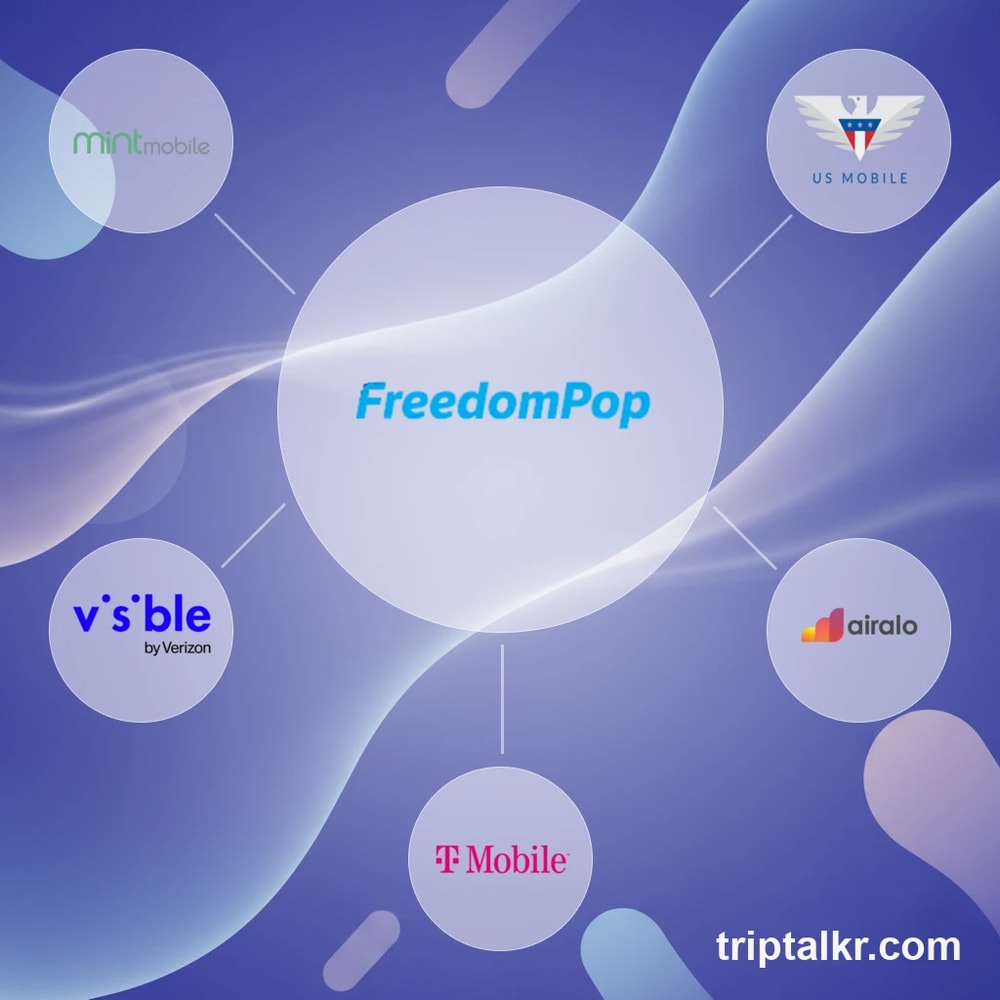
The 5 Alternatives to FreedomPop
:
Top No-Contract Plans — 2026
Compare SIM Card alternatives using pricing tiers, reliability signals, and user ratings from verified MVNO competitors.
Explore Your Options
Alternative products worth considering.
Choosing a mobile plan often starts with flexibility, which is why many users begin with services like FreedomPop. Its appeal comes from low-cost or even free entry-level access, but real-world usage patterns show that users frequently outgrow these basics when they need more consistent connectivity, clearer call quality, or predictable billing. This is where exploring an Alternative to FreedomPop: Top No-Contract Plans becomes relevant, not as a replacement, but as a way to evaluate how different providers balance cost, reliability, and everyday usability.
Across verified competitors such as Ting, NET10 Wireless, and Republic Wireless, the comparison shifts toward measurable factors like pricing tiers (from $0 to $25 per month), service reliability, and user satisfaction benchmarks that often exceed 90 percent recommendation rates in adjacent communication tools. While some options maintain low entry pricing, others prioritize stability and feature depth, reflecting a common trade-off between freemium access and dependable performance. These differences matter most for users who rely on their SIM card for daily communication rather than occasional use.
Another key consideration is how alternatives handle usability and scalability. Data from broader communication platforms highlights the importance of ease of use ratings typically above 4.3 out of 5, along with features like multi-device access or improved call clarity. Even though not all alternatives are traditional SIM-based services, these benchmarks help define what users now expect from modern mobile connectivity, including seamless setup, responsive support, and consistent network behavior.
This guide to Alternative to FreedomPop: Top No-Contract Plans is designed to help you interpret those differences through a practical lens. Instead of focusing on a single “best” option, it breaks down how various plans align with specific needs, whether that is minimizing monthly costs, improving reliability, or finding a better balance between flexibility and performance.
Alternative Options
Other products worth your attention.
T-Mobile offers a highly relevant alternative to FreedomPop, sharing many core functionalities and device compatibility. While T-Mobile provides more expansive network coverage, including 5G and global compatibility, the two are comparable in basic usage for prepaid smartphone, tablet, and hotspot users.
Both provide physical SIM card support suitable for smartphones, tablets, and hotspot devices.
T-Mobile supports a broader range of device types, including smartwatches and IoT devices, while FreedomPop focuses on smartphones, tablets, and hotspots.
Both offer prepaid billing options, with T-Mobile also supporting postpaid plans.
Network compatibility overlaps with 4G LTE access, but T-Mobile extends to 5G, offering potentially faster and more reliable connections.
Activation methods for both are online, in-store, and QR code-based, ensuring ease of setup.
Both support major device brands like Apple and Samsung and operating systems, including iOS and Android.
Customer support availability and channels are similar, with 24/7 assistance via multiple contact methods.
T-Mobile offers a higher network priority level and better overall network performance and reliability ratings.
Overall, T-Mobile can effectively replace FreedomPop for users seeking enhanced network performance and expanded device compatibility, while maintaining similar core functionalities.
Nerdy Bits & Must-Knows
Specs worth knowing…
T-Mobile
SIM Card Type
What type of SIM card is this?
0
T-Mobile
0
Votes
Physical SIM, eSIM
SIM Card in this range
Who knows?
(Help us out by suggesting one!)
Defines whether the SIM is a physical card or embedded SIM.
Don’t keep it to yourself — be the first to react and review the
SIM Card Type on T-Mobile
◉ and help others decide!
Airalo Maneiro is a relevant alternative to FreedomPop, especially for users looking for a prepaid travel SIM solution that supports multiple device types and offers flexible network coverage. While differences in SIM type and network capabilities exist, Airalo Maneiro meets the primary needs of personal and travel data connectivity with comparable performance and device compatibility.
Both provide prepaid billing focused on travel and personal usage scenarios.
They support use on smartphones, tablets, and hotspot devices, covering typical user devices.
Each offers network compatibility with 3G and 4G LTE technologies and automatic network selection for seamless connectivity.
Data plans are limited, monthly reset with flexible plan change options, suitable for moderate use cases.
Overall, Airalo Maneiro can practically replace FreedomPop for most users seeking prepaid data services with good network reliability and flexible device compatibility, despite differences in SIM form factor and some advanced network features.
Mint Mobile eSIM offers a relevant alternative to FreedomPop for users seeking prepaid mobile service with similar device compatibility and flexible usage options, albeit with some differences in SIM type and network capabilities.
Both support prepaid billing and are intended for personal use on smartphones and tablets.
They are compatible with iOS and Android operating systems and support a variety of device types, including hotspots.
Both provide 3G and 4G LTE network support with regional SIM compatibility and automatic network selection.
Mint Mobile eSIM adds support for 5G, offering improved network speed and low latency compared to FreedomPop's standard LTE performance.
While FreedomPop uses a physical standard SIM, Mint Mobile uses eSIM technology, which may affect device compatibility and ease of switching.
Both offer flexible plan change options and 24/7 customer support with multiple help channels.
Overall, Mint Mobile eSIM can serve as a strong alternative for users comfortable with eSIM and seeking faster network performance with similar prepaid and device support features.
Nerdy Bits & Must-Knows
Specs worth knowing…
Mint Mobile eSIM
Intended Device Type
What devices is this SIM intended for?
0
Mint Mobile eSIM
0
Votes
Smartphone, Tablet, Smartwatch, Hotspot
SIM Card in this range
Who knows?
(Help us out by suggesting one!)
Identifies the types of devices the SIM is designed for.
Don’t keep it to yourself — be the first to react and review the
Intended Device Type on Mint Mobile eSIM
◉ and help others decide!
Mint Mobile eSIM
Billing Type
What is the billing type?
0
Mint Mobile eSIM
0
Votes
Prepaid
SIM Card in this range
Who knows?
(Help us out by suggesting one!)
Specifies the billing model associated with the SIM.
Don’t keep it to yourself — be the first to react and review the
Billing Type on Mint Mobile eSIM
◉ and help others decide!
Mint Mobile eSIM
Supported Network Type
Which network types are supported?
0
Mint Mobile eSIM
0
Votes
3G, 4G LTE, 5G
SIM Card in this range
Who knows?
(Help us out by suggesting one!)
Indicates which cellular network types the SIM can connect to.
Don’t keep it to yourself — be the first to react and review the
Supported Network Type on Mint Mobile eSIM
◉ and help others decide!
Visible eSIM is a relevant alternative to FreedomPop for users seeking a prepaid mobile service with similar core functionalities but with some distinctions in SIM technology and data offerings.
Both offer prepaid billing and support voice calls, SMS, and VoIP, making them suitable for personal use on smartphones.
Visible uses eSIM technology, while FreedomPop offers a physical standard SIM card, reflecting different approaches in device compatibility and SIM management.
Visible supports 5G and provides unlimited data plans, whereas FreedomPop supports only 3G/4G LTE and offers limited data plans.
Both have strong network reliability and support automatic network selection, ensuring stable connectivity and ease of use.
Overall, Visible eSIM can practically replace FreedomPop for many users, particularly those with eSIM-compatible devices and a need for higher-speed unlimited data.
Nerdy Bits & Must-Knows
Specs worth knowing…
Visible eSIM
SIM Card Type
What type of SIM card is this?
0
Visible eSIM
0
Votes
eSIM
SIM Card in this range
Who knows?
(Help us out by suggesting one!)
Visible eSIM
This SIM card type is an eSIM, an embedded SIM technology that eliminates the need for a physical card.
Defines whether the SIM is a physical card or embedded SIM.
Don’t keep it to yourself — be the first to react and review the
SIM Card Type on Visible eSIM
◉ and help others decide!
Visible eSIM
Billing Type
What is the billing type?
0
Visible eSIM
0
Votes
Prepaid
SIM Card in this range
Who knows?
(Help us out by suggesting one!)
Visible eSIM
Billing type is Prepaid, so users pay for service in advance rather than receiving a bill after usage.
Specifies the billing model associated with the SIM.
Don’t keep it to yourself — be the first to react and review the
Billing Type on Visible eSIM
◉ and help others decide!
Visible eSIM
Supported Network Type
Which network types are supported?
0
Visible eSIM
0
Votes
4G LTE, 5G
SIM Card in this range
Who knows?
(Help us out by suggesting one!)
Indicates which cellular network types the SIM can connect to.
Don’t keep it to yourself — be the first to react and review the
Supported Network Type on Visible eSIM
◉ and help others decide!
The US Mobile eSIM is a relevant alternative to FreedomPop, especially for users seeking a flexible prepaid mobile data and voice service. Although the two differ in SIM card type, the US Mobile eSIM supports similar device categories and usage scenarios, with added support for 5G and higher network speed classes.
Both products target personal and travel use with prepaid billing plans.
Supported device types mostly overlap, including smartphones and tablets (US Mobile additionally supports smartwatches).
Both support 4G LTE networks with regional compatibility, but US Mobile extends coverage to 5G and mmWave bands.
Network selection mode is automatic in both, and both have similar security standards and encryption.
US Mobile offers unlimited data plans and generally higher network performance ratings compared to FreedomPop's limited data approach.
Overall, US Mobile eSIM can serve as a practical replacement for FreedomPop for users comfortable with eSIM technology and seeking enhanced network capabilities.
Nerdy Bits & Must-Knows
Specs worth knowing…
US Mobile eSIM
SIM Card Type
What type of SIM card is this?
0
US Mobile eSIM
0
Votes
eSIM
SIM Card in this range
Who knows?
(Help us out by suggesting one!)
Defines whether the SIM is a physical card or embedded SIM.
Don’t keep it to yourself — be the first to react and review the
SIM Card Type on US Mobile eSIM
◉ and help others decide!
US Mobile eSIM
Intended Device Type
What devices is this SIM intended for?
0
US Mobile eSIM
0
Votes
Smartphone, Tablet, Smartwatch
SIM Card in this range
Who knows?
(Help us out by suggesting one!)
Identifies the types of devices the SIM is designed for.
Don’t keep it to yourself — be the first to react and review the
Intended Device Type on US Mobile eSIM
◉ and help others decide!
US Mobile eSIM
Intended Usage
What is the intended usage?
0
US Mobile eSIM
0
Votes
Personal, Travel
SIM Card in this range
Who knows?
(Help us out by suggesting one!)
Describes the primary usage scenario of the SIM card.
Don’t keep it to yourself — be the first to react and review the
Intended Usage on US Mobile eSIM
◉ and help others decide!
Worth a Second Look
Didn't make the cut this time, but still solid options.
Stuff You Were Too Shy to Ask
But we answered it anyway.
What matters most when comparing no contract SIM card plans?
When comparing no-contract SIM card plans, the most relevant factors are pricing tiers, network reliability, and ease of use. Entry pricing often ranges from free to around $25 per month, but lower-cost plans may limit data speeds or coverage consistency. Reliability can be inferred from user satisfaction scores, often above 90 percent in stronger services, and ease of use ratings above 4.3 out of 5. Together, these indicators help determine whether a plan supports daily communication needs or is better suited for light, occasional use.
How does pricing affect performance in prepaid mobile plans?
Pricing in prepaid mobile plans typically reflects trade-offs between cost and service consistency. Lower-priced or free tiers may offer limited data, reduced speeds, or less stable connectivity, while plans in the $15 to $25 per month range often provide more predictable performance. It is important to evaluate what is included, such as call clarity or data prioritization, rather than focusing on price alone. A slightly higher monthly cost can result in more reliable day-to-day usage, especially for users who depend on mobile connectivity regularly.
Which reliability indicators show better mobile network performance?
Reliable mobile performance is often indicated by high user recommendation rates and consistent usability scores. Metrics such as ratings above 4.5 out of 5 and recommendation levels near or above 90 percent suggest stable service quality. While exact uptime percentages are not always disclosed, consistent feedback on call clarity, minimal dropped connections, and smooth app performance can signal strong reliability. These indicators are especially useful when direct network performance data, such as latency or bandwidth allocation, is not publicly available.
Can free plans deliver consistent call and data quality?
Free plans can provide basic functionality, but consistent call and data quality may vary significantly. Many free-tier services prioritize affordability over performance, which can result in slower speeds or less reliable connections during peak usage. These plans are often suitable for backup or light usage scenarios rather than primary communication. Evaluating user feedback and reported stability helps clarify expectations, as higher-tier paid plans generally allocate more resources to ensure smoother and more dependable connectivity.
How important is ease of use in mobile plan selection?
Ease of use plays a critical role, especially for users who prefer quick setup and minimal configuration. Platforms with usability ratings above 4.3 out of 5 typically offer intuitive interfaces, straightforward activation, and reliable app performance. This reduces friction during onboarding and daily management. While technical features matter, a complicated setup process can offset their benefits. In practice, a user-friendly experience ensures that essential tasks like monitoring usage or managing billing remain efficient and accessible.
What features improve usability in modern SIM card services?
Modern SIM card services improve usability through features like multi-device access, clear account dashboards, and responsive support. These elements help users manage their plans more effectively without technical barriers. Additional enhancements, such as call clarity optimization or basic noise reduction technologies, can also improve everyday communication quality. While not always essential, these features indicate a more mature service offering that aligns with current user expectations for convenience and reliability.
Are no contract plans suitable for long term daily use?
No contract plans can be suitable for long-term use if they provide consistent performance and transparent pricing. While flexibility is a key advantage, long-term reliability depends on network stability and service quality rather than contract terms alone. Users should monitor factors like connection consistency and support responsiveness over time. Even when starting with services like FreedomPop, many users transition to more stable options once their usage increases, highlighting the importance of balancing flexibility with dependable performance.
How do user ratings help evaluate mobile service quality?
User ratings offer a practical way to assess real-world performance and satisfaction. Scores typically range from 3.5 to 5.0, with higher ratings indicating better reliability, usability, and support experiences. Consistently strong ratings across multiple categories, such as value and ease of use, suggest a well-rounded service. While ratings should not be the only factor, they provide useful context when combined with measurable data like pricing tiers and feature availability, helping users make more informed comparisons.
Big Brain Stuff, Summed Up
Because who reads everything, right?
Exploring an Alternative to FreedomPop: Top No-Contract Plans highlights how different providers balance flexibility with measurable performance factors such as network speed, data limits, and reliability. While FreedomPop remains a useful entry point for low-cost connectivity, many alternatives extend capabilities with 4G LTE and 5G support, broader device compatibility, and more predictable service consistency. These differences are especially relevant for users who rely on mobile data daily, where factors like network priority, latency, and plan stability can directly impact usability.
Across the options reviewed, clear patterns emerge around pricing tiers, network coverage, and data allowances. Plans ranging from basic prepaid structures to unlimited data offerings may suit different usage levels, while features like automatic network selection and multi-device support help streamline the experience. The shift from physical SIM to eSIM technology also introduces flexibility, though it may depend on device compatibility. Evaluating these measurable attributes alongside user satisfaction signals can help clarify which plan aligns best with specific needs.
Ultimately, selecting the right alternative depends on how you prioritize cost efficiency, performance consistency, and long-term usability. Rather than focusing on a single “best” option, comparing verified specifications and real-world indicators provides a more reliable path to decision-making. A careful, data-driven approach will consistently lead to a plan that fits both your budget and connectivity expectations.